
Stepping into Jamaa El’Fna Square, the vibrant pulse of Marrakech instantly enveloped me. The sounds, smells, and sights of this historic city square were the perfect starting point for my walking tour of the Medina, the old city, with our knowledgeable guide.


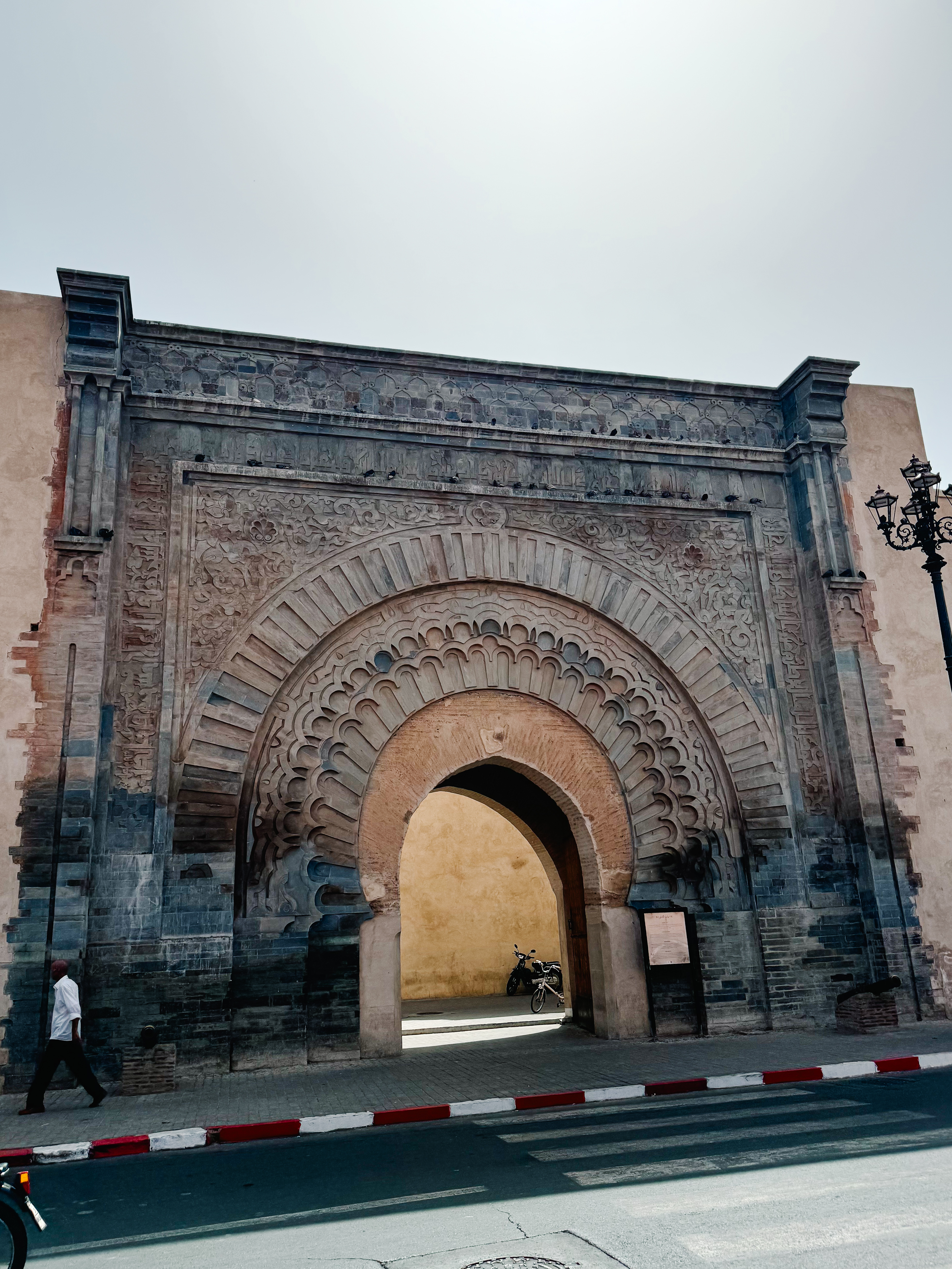
Jamaa El’Fna Square: Our adventure began in this bustling square, renowned for its lively atmosphere filled with street performers, food stalls, and vendors. It’s a place where the essence of Marrakech’s vibrant culture is palpable.
Narrow, Winding Streets: From the square, we ventured into the Medina’s labyrinthine streets. Each turn revealed something new—colorful souks, intricate alleyways, and the everyday life of Marrakech’s residents. Our guide shared stories of the Medina’s rich history, bringing the ancient city to life with tales of its past and present.


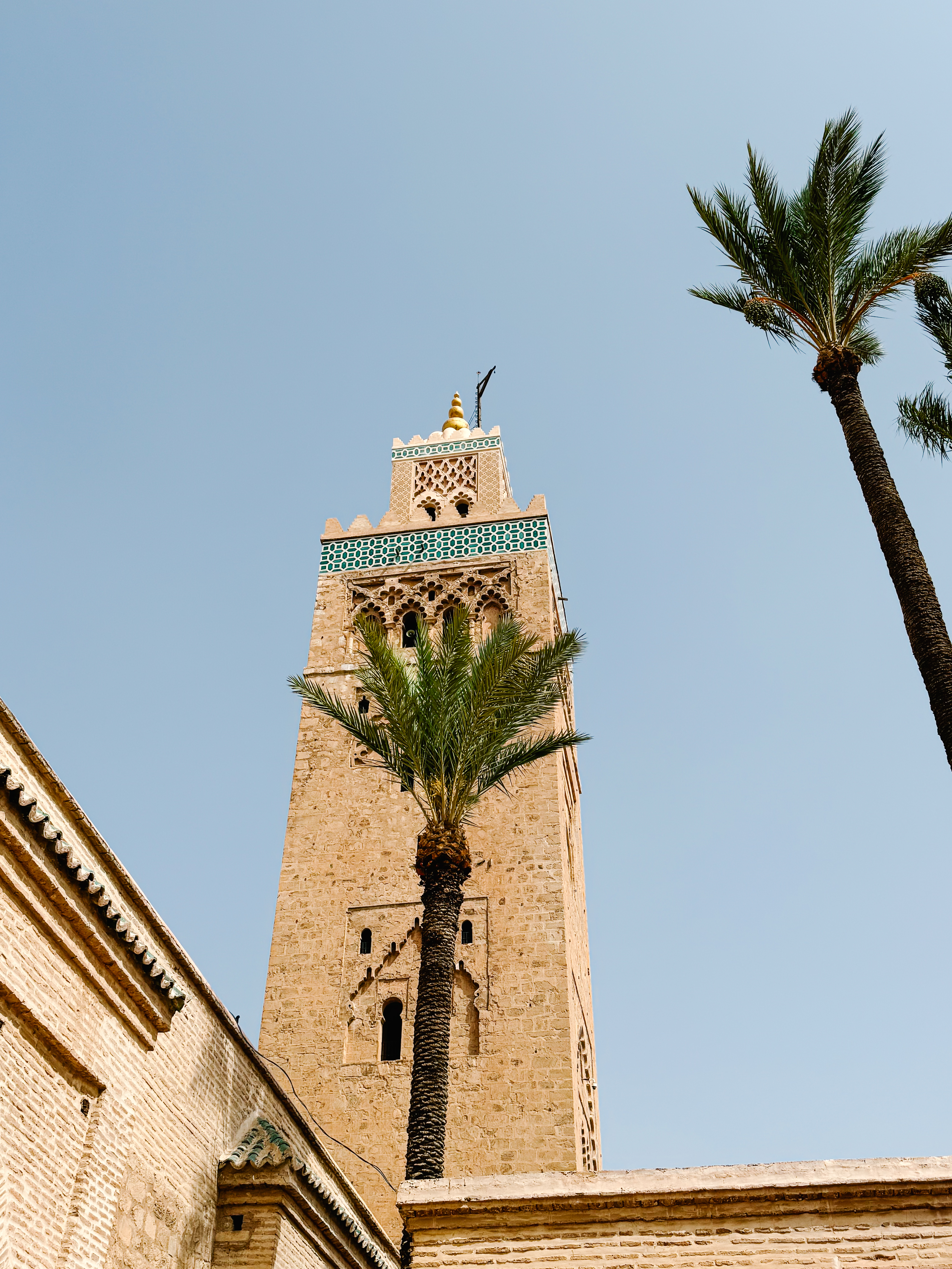
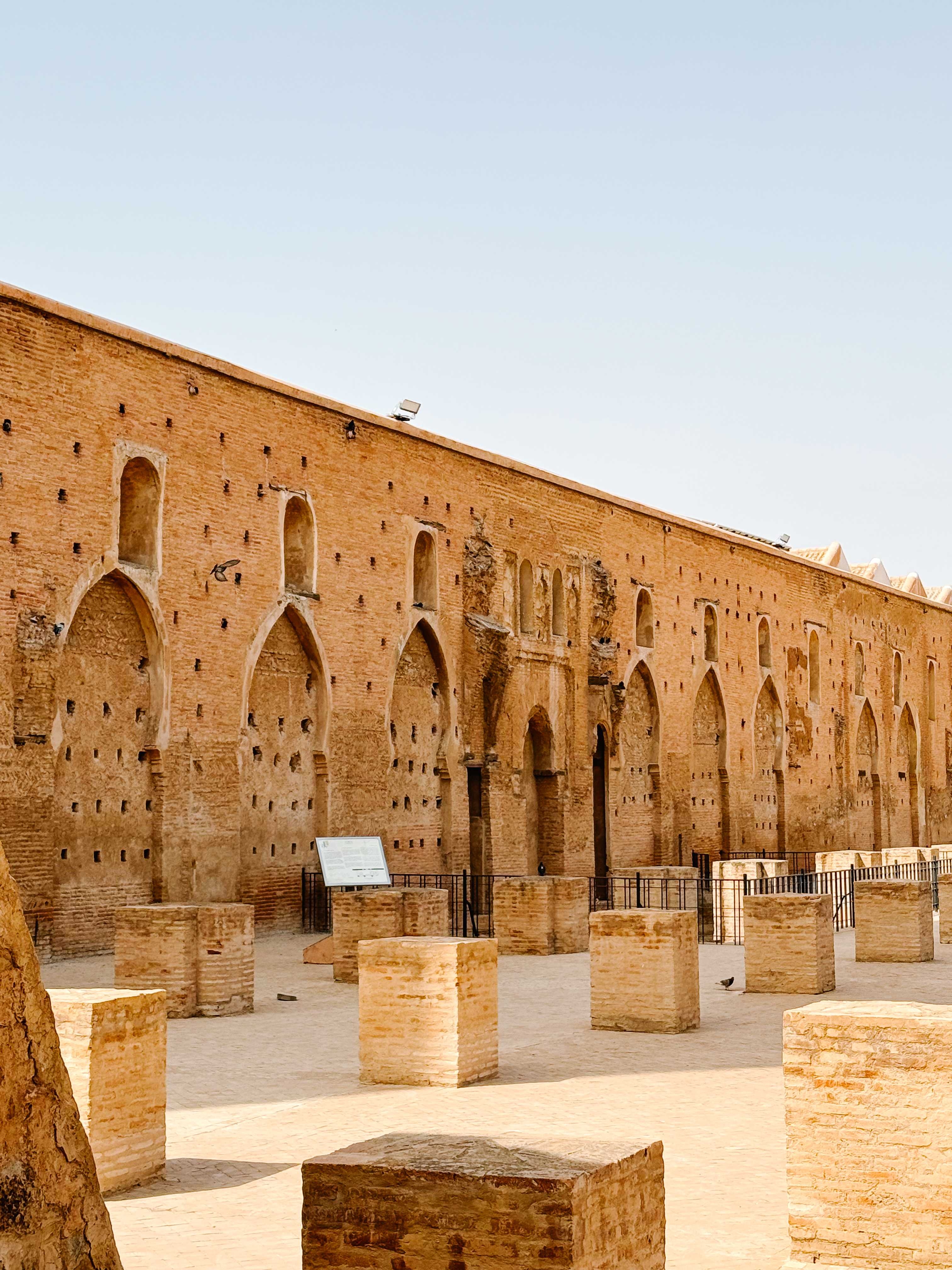
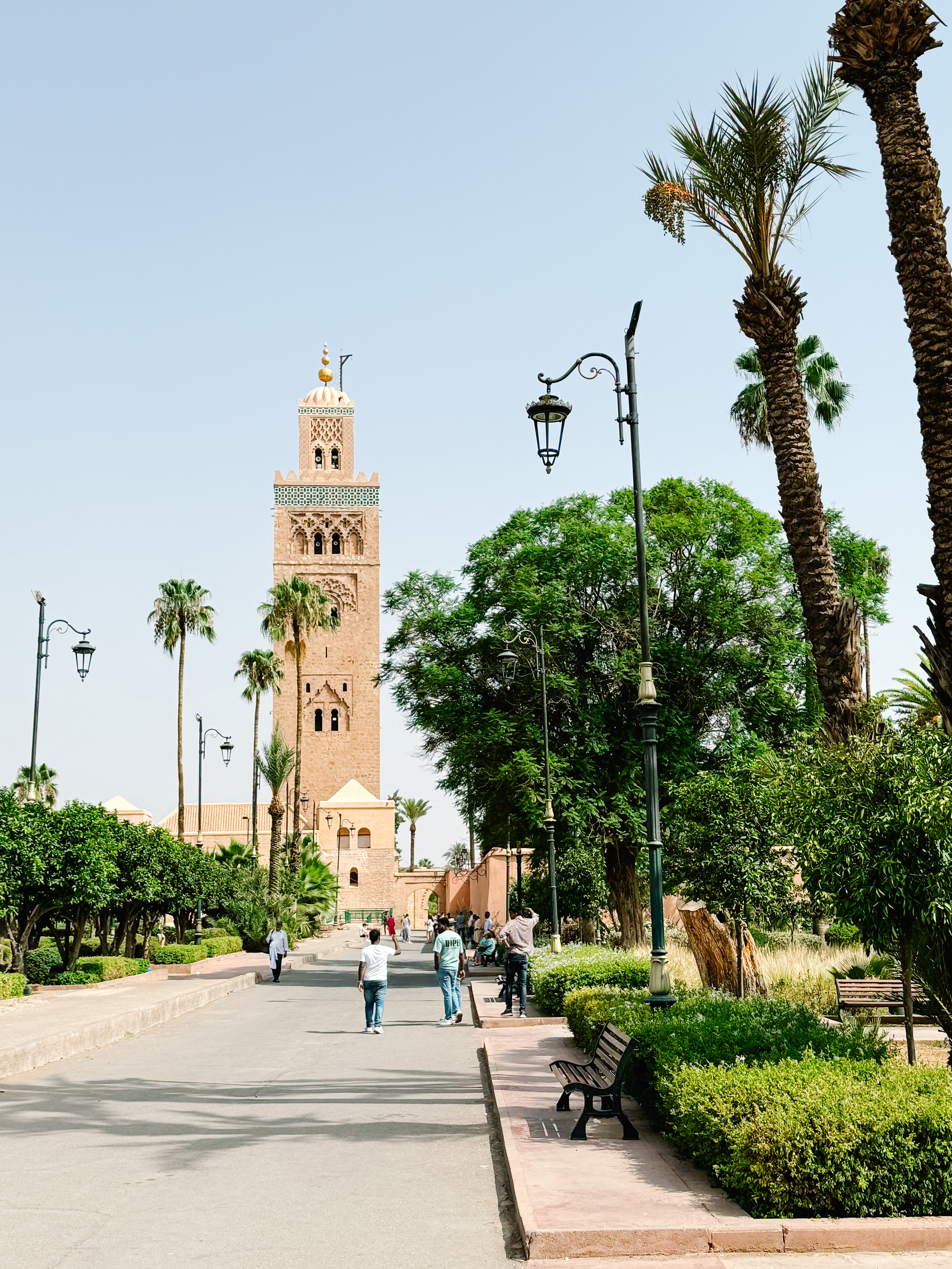
Five Pillars of Islam: As we walked, our guide introduced us to the five pillars of Islam, which are fundamental to understanding Morocco’s cultural and religious fabric. These pillars—Shahada (faith), Salah (prayer), Zakat (charity), Sawm (fasting), and Hajj (pilgrimage)—are woven into the daily lives of the people we encounter.
Koutoubia Mosque: One of the highlights was the Koutoubia Mosque, a stunning example of Almohad architecture. Standing tall with its impressive minaret, the mosque is a place of worship and a landmark of Marrakech. Our guide explained the significance of its design, including the beautiful horseshoe arches that are a hallmark of Moroccan architecture.
Horseshoe Arches: These iconic arches, seen throughout Medina, are more than just architectural features; they symbolize the Islamic world’s rich artistic heritage. Each arch we passed seemed to tell its own story, a testament to the intricate craftsmanship of Moroccan builders.


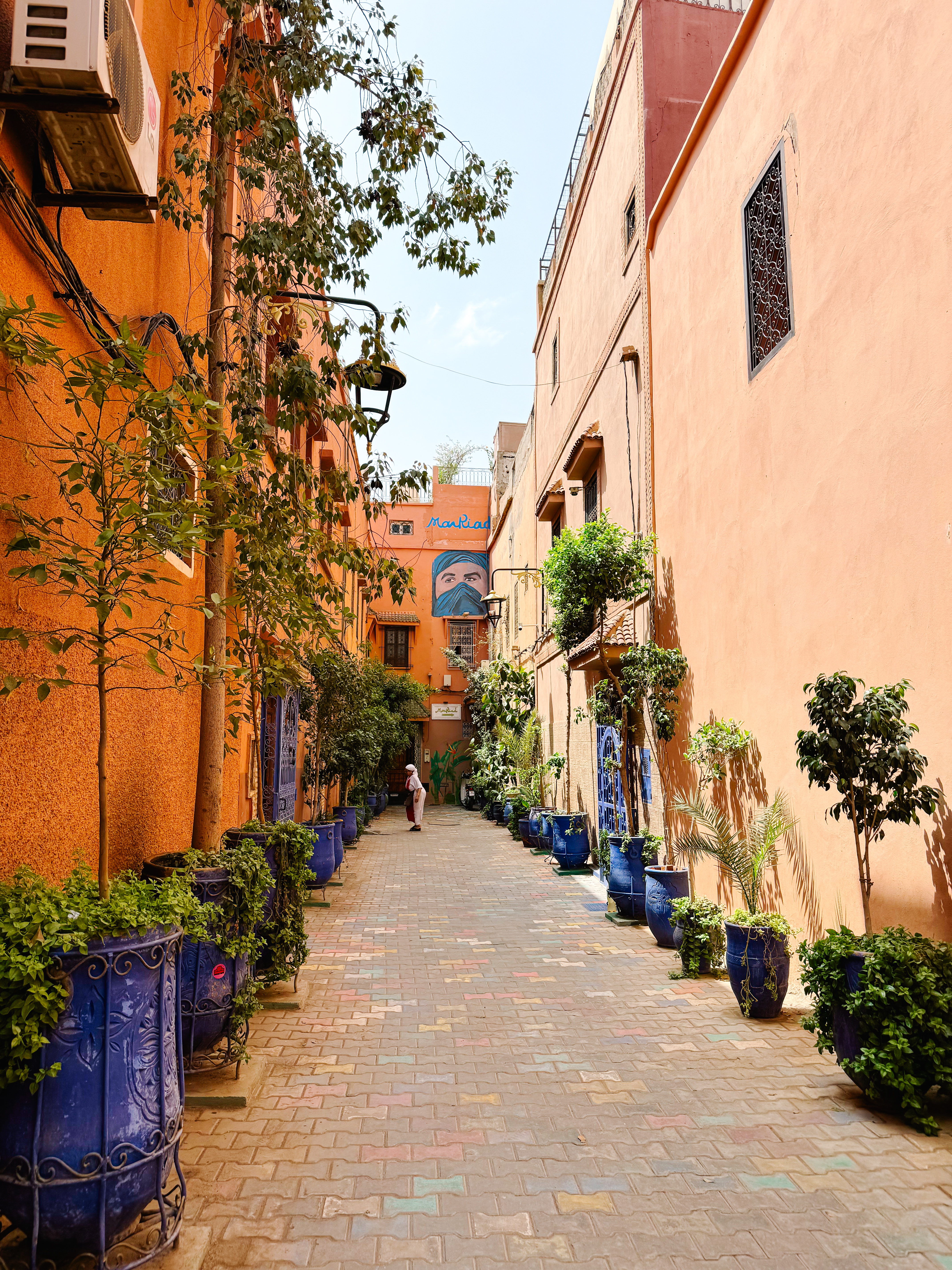


Riads and Their Doors: As we continued our walk, we passed numerous riads—traditional Moroccan houses with interior gardens or courtyards. The doors of these riads, often elaborately decorated, caught my eye. Our guide explained how these doors serve as an entrance and a statement of artistry and hospitality.
Fountains: Water is a precious resource in Morocco, and fountains in the Medina are both practical and decorative. We paused at several beautifully designed fountains, learning about their historical importance and how residents have used them for centuries.
Cultures, People, and Languages: Marrakech is a melting pot of cultures, and our guide introduced us to the diversity of its people. We discussed the various languages spoken, including Arabic, Berber, and French, and how these linguistic threads weave together the rich tapestry of Moroccan society.
Traditions and Economy: Our tour also delved into the traditions that shape everyday life in the Medina. From the bustling souks where traders sell their goods to the intricate art of Moroccan craftsmanship, I gained a deeper appreciation for Marrakech’s vibrant economy and cultural heritage.
Political System: Lastly, our guide touched upon Morocco’s political system, providing insights into how the country is governed and the role of the monarchy in maintaining stability and continuity.
As the tour concluded, I felt a profound connection to Marrakech and its Medina. This walk through the city’s heart was a journey through space, time, and culture. I left with a greater understanding and appreciation for Morocco’s rich history, diverse culture, and warm hospitality.
If you ever find yourself in Marrakech, I highly recommend taking a walking tour of the Medina. It’s an experience that will deepen your connection to this beautiful city and its people, leaving you with memories to cherish for a lifetime.
 She Travels Alone
What are your thoughts?